


Air
Pesticides can turn into vapours and be transported by the wind to other areas. This process can also dilute them, reducing their concentration.
Surface water
Pesticides can enter surface waters such as rivers, lakes, ponds and streams through runoff, drift or drainage.
Active substances can become attached to material in the water such as sand or be transported by moving water.
Once in aquatic environments, pesticides may alter the quality of the water and affect fish, algae, plants and invertebrates, potentially disrupting food chains.
Soil
The way pesticides drift move or persist in soil can determine how they affect other environments.
They can be transported horizontally on top of the soil (run off) or under the soil (drainage), or downwards, by attaching to the soil particles (adsorption) or being carried by water (leaching).
Pesticides can affect soil organisms such as earthworms, insects and microorganisms, and disrupt the role they play in healthy soil.
We are currently updating the guidance for how to assess risks to soil organisms.
Ground water
When pesticides move down through the soil, they can contaminate groundwater, posing risks to drinking water sources.
Plants
Pesticides can drift and reach non-target plants, potentially damaging their health, and contaminating seeds, leaves, fruit, pollen and nectar that wildlife depend on for food and shelter.
Pesticides can also be absorbed by plants and degraded by their metabolic processes before evaporating from their surface.
We are currently updating our guidance on how to assess risks to non-target plants and non-target arthropods.
Birds and mammals
Pesticides can affect birds and mammals when their food - such as leaves, fruits, seeds, insects, and creatures in water and soil - is contaminated.
Our risk assessments evaluate potential impacts on their reproduction, survival, and the overall health of the population.
Bees
Pesticides can affect pollinators such as bees if they come into contact with pesticide-treated plants, sprays or ingest contaminated nectar and pollen.
We developed updated guidance on how to assess the risk of pesticides to honey bees, bumble bees and solitary bees.
Other non-target arthropods
Arthropods other than bees such as wasps, mites, spiders and beetles can be exposed to pesticides through contaminated food sources, and contact with treated surfaces and sprays.
We are currently updating the guidance on how to assess risks to non-target plants and non-target arthropods.
Application
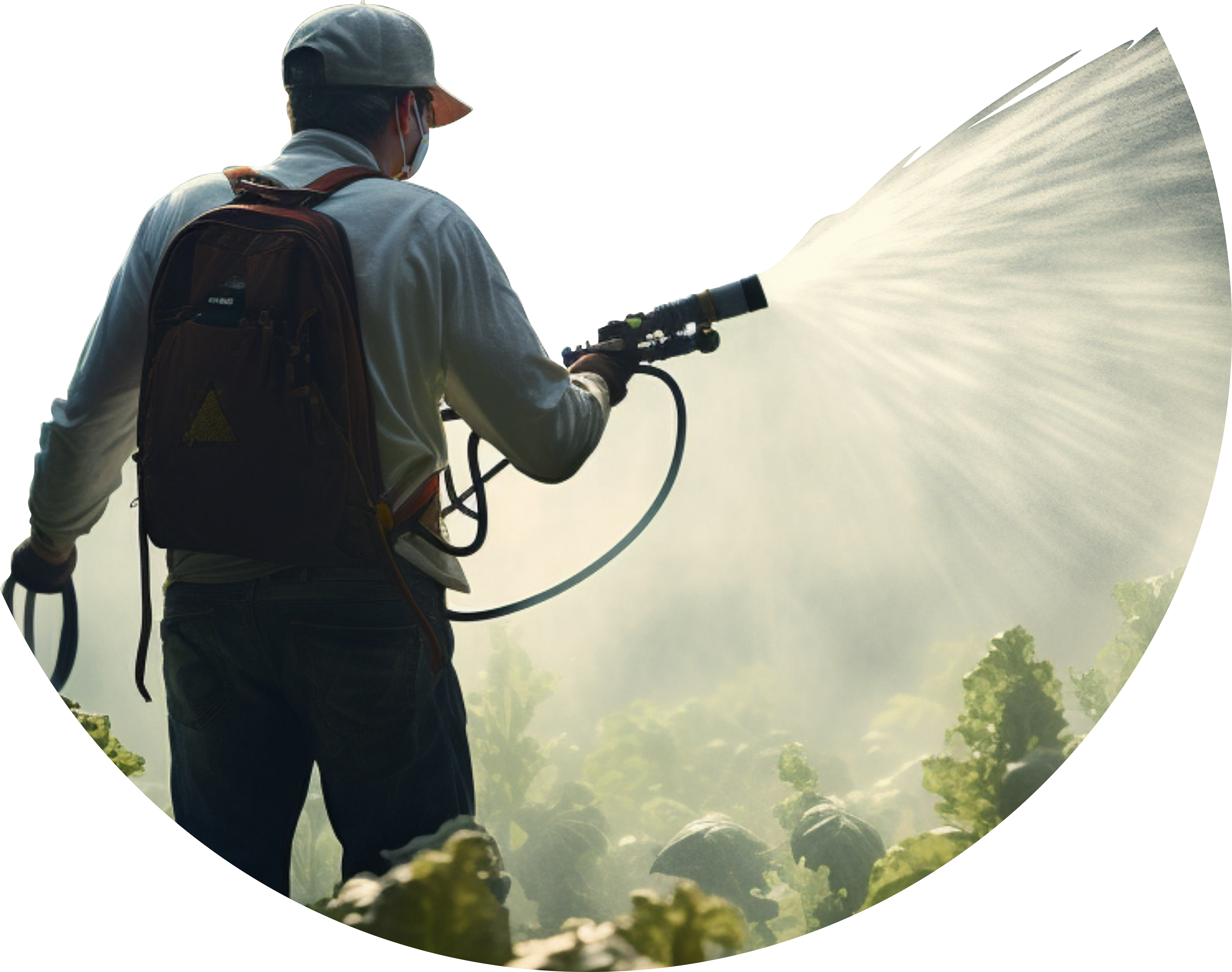
Pesticides can be applied to crops using various methods such as spraying, mixing into the soil or the use of treated seeds.
Pesticides enter our environment when they are used, mainly by farmers and other professional users. The label specifies how the product should be used correctly.
How a pesticide is applied and its unique properties impact how it may interact with the environment.
Movement and breakdown
Pesticides do not always stay in the area where they are applied. They may be transported by water or air or transformed into other substances when broken down by sunlight, chemical reactions or microbes.
Pesticides can also be transformed when taken up by plants or ingested by animals.
The resulting breakdown products, known as metabolites, can be less or more hazardous than the original pesticide.
Indirect effects on wildlife and biodiversity
Pesticides can have indirect harmful effects such as reducing food for wildlife, disrupting food chains.
We are currently working on a methodology to assess risks of indirect effects on wildlife.

Environmental risk assessment of pesticides

Published: 24 February 2026
We assess the risk pesticides may pose to our environment. We look at what happens to a pesticide after it is used and potential undesired effects on our wildlife, plants, soil, water and air.

What are pesticides?
Pesticides – or plant protection products – help control pests such as insects, manage weeds and keep plants healthy from disease.
Pesticides contain at least one active substance, the key ingredient in a pesticide that enables it to do its job.
They also contain other ingredients such as co-formulants to improve their performance. The EU only approves active substances if they have no harmful effects on human and animal health, and do not cause unacceptable effects on the environment.
Where can pesticides end up?
Application
Pesticides can be applied to crops using various methods such as spraying, mixing into the soil or by using treated seeds... read more
Movement and breakdown
Pesticides do not always stay in the area where they are applied. They may be transported by water or air or transformed into other substances when broken down by sunlight, chemical reactions or microbes... read more
Indirect effects on wildlife and biodiversity
Pesticides can have indirect harmful effects such as reducing food for wildlife and disrupting food chains... read more
Impact on the environment
To understand the effects of a pesticide on the environment, we look at two main aspects:
Environmental fate and behaviour
These refer to what happens to a pesticide after it is used including how it breaks down, moves and accumulates in soil.
Ecotoxicology
This refers to how a pesticide impacts on organisms and ecosystems.
Hazard identification and characterization
We identify and define potential harmful effects on non-target organisms.
Environmental fate and exposure assessment
We assess how a pesticide moves, breaks down and accumulates in the environment. We evaluate how much will be present in different ecosystems and how non-target organisms are exposed.
Risk characterization
We combine hazard and exposure data to estimate the risk to non-target organisms and the environment.
What we do
- Evaluate specific and intended uses of pesticides
- Assess environmental risks of a use specified in an application
- Provide independent scientific advice on environmental risks of pesticides
- Develop and update guidance documents
- Organize workshops and other meetings to share knowledge
What we don't do
- Take regulatory decisions such as authorising active substances and pesticide products
- Conduct field trials or experimental studies
Pesticide evaluation process and applications
Our assessment of the risks a pesticide may pose to the environment is one part of the overall risk assessment of pesticides.
EFSA, together with Member States, also assesses risks to human health.
Cooperation and networks
We work closely with EU Member States, international organizations and other scientists to improve how pesticides are evaluated, globally and within the EU.
We share knowledge, data and best practices to harmonise methods for assessing risks.
We organize joint projects with universities and research institutes to gather scientific information, identify new risks and help create international standards for pesticide safety.

EFSA’s Panel
EFSA’s Panel on Plant Protection Products and their Residues is the group of independent experts which evaluates scientific evidence and provides scientific advice on the risk assessment of pesticides.
Our work supports the evaluation of active substances used in pesticides, which is carried out by Member States and peer reviewed by EFSA staff.