

Episode 35 – Bean there, cooked that: are raw legumes safe?
How we prepare our food influences its taste, aroma and appearance, but most importantly its safety. This is especially true for legumes such as beans and lentils, which contain substances called lectins that can be harmful to humans. Which type of lectins are the most damaging, and what can we learn from our ancestors when it comes to preparing traditional recipes safely? Join us as we explore safe preparation and cooking techniques that will help you enjoy nutritious legumes with confidence.
Listen on:


00:00
Eirini
Theseus went to Crete to fight with the Minotaur, and he successfully won the fight.
On his way back to Athens, he stopped in Delos to offer something to Deus Apóllōn for this success, and apparently from this long trip that they had from Crete to Delos, there was nothing else left other than beans. So, this is the first mention that they prepared this bean stew and offered it to Apóllōn.
[Intro]
00:39
Mariya
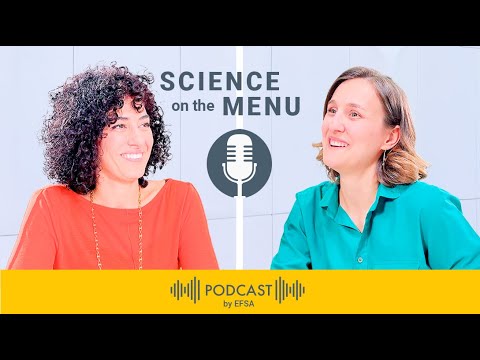
Welcome back to Science on the Menu. In this episode, we will be discussing a group of substances called lectins. They can be beneficial to plants, but also quite harmful to humans. To help us understand this topic a bit better, I'm joined today by Eirini Kouloura, scientist in EFSA’s Contaminants team. Welcome Eirini, nice to have you.
01:03
Eirini
Nice to be here, Mariya. Thanks a lot for inviting me.
01:07
Mariya
My first question for you is: what are lectins, and why do we care about them?
01:11
Eirini
Lectins, as you mentioned, this diverse group of proteins, they bind specifically to carbohydrates. So, lectins naturally are produced by plants as part of their defence mechanisms, they are protecting plants from pests and other pathogens. However, in this sense, they are harmful sometimes for humans.
01:35
Mariya
Okay. In which foods exactly do we find lectins?
01:40
Eirini
Yeah, that's a good question. So, we have lectins almost everywhere. We have them in plants and other organisms as well, in, let's say, fungi, in marine organisms. All organisms have lectins, but specifically plants, lectins in several let's say parts. We find it in the seeds, fruits, in leaves. We can find lectins in all plant-based foods. Some examples, in legumes, in grains, in vegetables and fruits, everywhere you can find lectins.
02:15
Mariya
Okay. Are all of these lectins equals? Are they all the same?
02:19
Eirini
That's a good question. No, all those lectins are not the same. We have some lectins, some types of lectins which bind specifically to simple carbohydrates such as glucose, mannose, galactose, which are also ingredients of the food. There are, on the other side, some other lectins which bind specifically to those complex glycans, which are present, for instance, on the surface of the cells. One example is the cells that we have in our gastrointestinal tract.
As a result, when we ingest them and they are in their active form, they bind to those cells and they create some side effects, let say some adverse effects in humans. To name some - nausea, gastrointestinal pains, diarrhoea, or even immune effects, which may be local inflammation in the gastrointestinal tract.
03:21
Mariya
Okay, I see. Sounds a bit scary, I must be honest. Maybe to make it understandable for myself mainly, but also for viewers and listeners, I've brought a few things here with me, some food items. So, I brought some bananas. We have here these three beautiful onions… And last but not least, some kidney beans. So, seeing them here like this, what can you tell me about these three items? What do they have in common?
03:51
Eirini
They have in common that all contain lectins. However, as we described before, they're different types of lectins. So here, we can group them in one group, let's say, the harmless lectins, that we have in bananas and in onions. This means we can eat them raw and nothing will happen. Whereas here we have… this is a kidney bean.
04:17
Mariya
It really wanted to come to you.
04:20
Eirini
Exactly, this is a kidney bean, and even a small amount of those raw kidney beans may cause all those adverse effects that we describe in humans. However, as we do traditionally, we will process them appropriately by soaking them, cooking them for a long time, and then those lectins are destroyed, and there is no side effect, like adverse effect for humans.
04:48
Okay. Important food, essential food - doesn't mean we should not eat kidney beans, let's say, or beans or legumes, but the preparation method is the key component there.
05:03
Eirini
Correct. Of course they are very essential for our nutrition, legumes. However, it's important and I think we all know that we cannot eat them raw.
So yeah, we have a lot of preparation methods, and by following all those, let's say, traditional, or even less traditional preparation methods, we make sure that what we do is safe.
05:28
Mariya
Great. I would like to stay on this topic for a bit longer, because there's actually a lot of information and sadly, also misinformation, out there when it comes to lectins and preparation and so on and so forth. So, I've done a bit of research: I've collected the most common questions or statements, and I was hoping you would help us out to understand whether they're true or false. I'm going to mention a few to them. Are you ready?
05:53
Eirini
Great. Okay, let's try to give some clearance.
05:57
Mariya
Okay. The first one is that soaking for a longer period of time or fermenting the product reduce the lectin levels in fruit.
06:08
Eirini
For sure. That’s correct, and as we mentioned just previously, those traditional and nontraditional preparation methods lead to the reduction or even the elimination of lectins. Soaking is one of those, let's say, traditional methods, and what is happening with soaking is that we have the water entering the seed, it activates some enzymes that are present in the seeds, and those enzymes break down lectins. At the same time, while soaking, we have the water entering the seed, and then the lectins, which are water soluble, can leach out the seed and go to the soaking water, and then, of course, we eliminate those, the soaking water and the lectins with it.
07:00
Mariya
Okay, yes. We don't use the same water to soak and boil afterwards.
07:03
Eirini
Yeah. It wouldn't be recommended.
07:05
Mariya
Still on the topic of soaking, is a big part of the preparation, adding a pinch of baking soda to the soaking water would reduce the lectin content as well.
07:23
Eirini
That's a good one. In fact, this is a tip I learned from my grandma. She was always recommending to add a pinch of baking soda, and I was also wondering what is happening when I started working on this mandate is in fact, what is happening is that it then makes, let's say, the soaking process faster.
The PH of the soaking water is elevated and then the skin of the beans gets decomposed more easily, and then, of course, the lectins can leach out the seeds faster. So, let's say, it's an accelerated tip to soak our beans better.
08:02
Mariya
Okay, great. It's amazing, all these processes are taking place when you just leave your beans or legumes to soak somewhere in the kitchen counter, and all these things are happening.
That's great. Leaving a bit soaking behind us, the next topic mentioned very often was that removing peels and seeds is also a way to remove lectins.
08:22
Eirini
Yes. This one, let's say, depends. It depends really on the fruit or legume that we are talking about. There are in some cases, lectins are accumulated in one part, let's say, of the fruit or the vegetables. One example is apples, for instance. We know that the lectins, the apple’s lectins are concentrated in the seeds. And the seed is a part of the apple we don’t eat. By removing the seeds, then we don't get exposed to lectins in this case.
09:00
Mariya
The next one I find personally quite interesting. So, lighter preparation techniques, such as for example, steaming, actually help preserve the flavour of the food and also help preserve the vitamin content of the food. What do you think about that?
09:17
Eirini
Well, this is a difficult one. Lighter preparation can be suitable for some cases, but not for all cases. So, for instance, for legumes, light preparation is not suitable because we know that we have lectins and we need, let's say, those long times to prepare them or efficient ways to prepare them in order to get rid of those lectins.
I would here mention our ancestors. I think those are traditional, let's say, recipes that they have been created since ages, and I'm pretty sure that those ancestors have tried different preparation methods, and there is a reason why we prepared them like these and not, let's say, faster.
I'm sure they have tested several things. We need to prepare them a bit thoroughly, in order to make them safe.
10:22
Mariya
Indeed. All this discussion of preparation and cooking, boiling and steaming, made me a bit hungry, which leads me also to the next question. Given that we are approaching the end of the year, it's getting a bit cold outside. I was wondering if you have a go-to comfort meal during the winter months, and also most importantly, how do you make sure this go-to meal is prepared safely.
10:48
Eirini
Very nice question. So, the first thing that comes into my mind is traditional Greek food that we used to cook during winter. It’s called fasolada, bean stew, so we stay in the area, in the topic of lectins.
We have the beans, and, contrary to other countries we prepare it without any meat, so it's only beans, that we need to soak overnight and then cook them for a long time. So, usually, we cook them for one and half hours, two hours, to prepare the fasolada.
This is a very nice comfort food for winter that comes into my mind. Now, discussing about this, the myth about this fasolada comes into my mind.
This fasolada was first mentioned in ancient Greece. This comes apparently from Theseus. Theseus went to Crete to fight with the Minotauros (Minotaur), and he successfully won the fight.
On his way back to Athens, he stopped in Delos to offer something to Deus Apóllōn (Apollo) for this success, and apparently from this long trip that they had from Crete to Delos, there was nothing else left other than beans. So, this is the first mention that they prepared this bean stew, and offered it to Apóllōn.
I hope Theseus managed to cook them for a long time and soak them for a long time.
12:24
Mariya
Yeah, with the divine help it was done correctly.
12:29
Probably this is when they realized how long they need to cook and prepare their beans, before eating them.
12:38
Mariya
Yeah, we come back to our ancestors, don't we? And the traditional methods of preparation, the knowledge that comes from them. Okay. Thanks very much Eirini, for sharing this nice story, for sharing this nice recipe, and most importantly, for sharing your expertise with all of us on this topic. Good luck with the work you're doing in this area for EFSA.
12:57
Eirini
Thank you so much Mariya, it was a pleasure talking to you and wish you all the best for this winter season.
13:05
Mariya
Thank you. Thank you very much also to our viewers and listeners. Remember, you can catch all episodes of Science on the Menu wherever you get your podcasts. My name is Mariya, it was a pleasure to be your host today, and I hope to see you next time on Science on the Menu.
Podcast details
Host: Mariya Dokova, Communication Assistant in the Communication Unit at EFSA
Guest: Eirini Kouloura, Scientific Officer in the Feed and Contaminants Unit at EFSA
Disclaimer: Views expressed by interviewees do not necessarily represent the official position of the European Food Safety Authority. All content is up to date at the time of publication.