
Episode 34 – Cost, origin, taste: what influences our food choices?
What’s most important to you when you buy food? Is it how much it costs, how it tastes, where it comes from or something else? In this episode, we’re exploring the results of our latest Eurobarometer survey, how the survey is conducted and what it tells us about our food choices.
We’ll look at where we get our information about food and whether concerns over food safety vary across Europe. And we’ll learn how social science research at EFSA improves how food safety risks are assessed and communicated. Join us as we unpack our behaviour at the supermarket.
Listen on:


00:00
Joana Lourenco
So, we have other data, that speaks also to, let's say, broader context. We have data, for example, showing that quite a substantial proportion of individuals, like 4 in 10, actually take for granted that the food sold is safe. So, I think that's part of the reason where it comes from, because it's still quite an important topic in people's mind.
00:30
Edward Bray
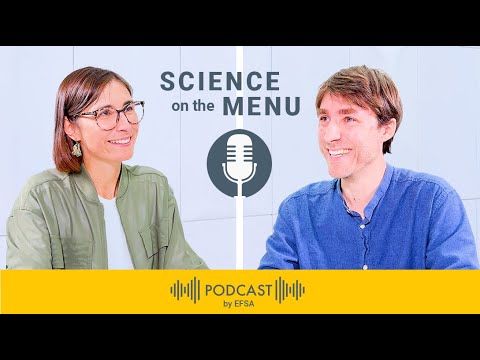
Hello and welcome to another episode of Science on the Menu. My name is Ed Bray and I work in the Communication team at EFSA, and joining me today is Joana Lourenco. Thank you very much for joining us, Joana. How are you today?
00:45
Joana Lourenco
Very well, thank you for having me.
00:47
Edward Bray
So, today we're going to be talking about food choices and the things that people think about when it comes to food, purchasing food, what are their concerns, etc. We're also going to look at social science. You're a social scientist. You can explain what that means in terms of a regulatory agency like EFSA. And, I think you've got a surprise for me as well in the form of a quiz. Is that right?
01:09
Joana Lourenco
Yes, that's right. Well, we'll get into it further ahead, I think.
01:13
Edward Bray
Okay. Perfect. So, let's start with the research that we've recently done on the Eurobarometer - tell me about that Joana. What is it exactly? Why do we do that?
01:24
Joana Lourenco
The Eurobarometer is a large-scale survey. We run it in the 27 Member States and it's running in the national languages. So, in 2025, we had a sample of over 26,000 respondents, and it's one survey that we ran face to face, which is often considered the golden standard for surveys. Now, because we have such a large sample and also because of the methodology, it gives us really high confidence in the results.
01:50
Edward Bray
So, tell us, what are some of the top level conclusions about when it comes to food, what people are thinking about.
01:59
Joana Lourenco
We have data on different aspects. So, if I think of data that we have on things that people care about the most when they make their food purchase decisions - here we really have cost coming at the top, with 6 in 10, considering it important. In fact, it went up relative to 2022 when we did the last survey - six percentage points. Perhaps not surprising because we have also data from other Eurobarometer showing that inflation, cost of living, are quite important to people in Europe. Then, we have taste and food safety. So, those come second and third, closely. About half of people care about these. And then finally, we have food origin and nutrient content. So those are, let's say, the top aspects influencing consumers decisions when they go to the supermarket to make their purchases.
02:53
Edward Bray
I think that makes sense - that when it comes down to it, money is important and we're all looking to make savings, etc. So, that's interesting. Food safety came in third. What can we draw from that?
03:07
Joana Lourenco
So, we have other data that speaks also to, let's say, broader context. We have data for example, showing that quite a substantial proportion of individuals, like 4 in 10, actually take for granted that the food sold is safe. So, I think that's part of the reason where it comes because it's still quite an important topic in people's mind, but it's also, one where we see high confidence in the system.
03:33
Edward Bray
Talking about food specific food safety concerns, can you tell us more specifically what are people thinking about when it comes to those?
03:43
Joana Lourenco
So, at the top, in terms of food concern, we had pesticide residues in food. That was already the case in 2022, in fact. So, 4 in 10 are concerned about it. That is then closely followed by antibiotics, hormones and steroid residues in meat, and then food additives. Now, interestingly, there weren't a lot of changes relative to 2022, in terms of the main concerns. But there was an exception, which is microplastics in food. We saw that one third was concerned about that topic. That is an increase relative to 2022, and here is one where it's also interesting for us to consider more country level data.
So, in 2022 it was the top concern in only one country - that was the Netherlands. If you fast forward to 2025, it's actually the top concern in five additional countries. In fact we are now doing additional research on the topic, to try and understand what may be driving higher concern or not with the topic, looking at things such as values, people's risk judgments, personal experience, social norms, and so forth.
04:55
Edward Bray
Okay, that makes sense. Also, given the public perception about environmental sustainability, plastic, a lot of articles in the media, we can see that reflected also in what we see around us.
05:08
Joana Lourenco
Exactly. In fact, part of this research that I mentioned, those are aspects that we will tackle now. We are measuring proxies, for example, the way people may feel close or not to the environment, how that may influence their decisions. In house, we also monitor social media discourse. So, because we will do this research in multiple countries, will also complement it with the analysis of social media discourse around this topic.
05:35
Edward Bray
We talked about a possible quiz that you might have. You have some questions.
05:41
Joana Lourenco
Yes, I’d be very happy to do it now. Okay, first question for you, as we talked at the beginning, food safety comes third in terms of what matters for people when they make their food purchase decisions. There were a couple of countries in Europe where it came first, and I would like your guess on what these countries may be.
06:03
Edward Bray
Okay, so full disclosure, I do not know the answer to this straight off. You're saying that food safety came top, so my guess is that it would be a country maybe with a higher GDP where people are thinking about this, maybe, you know, cost is not superseding. This is really a guess. I'm going to go with Austria, and I'm going to go with Sweden.
06:33
Joana Lourenco
Okay. Both of those are incorrect, but I like that you verbalize your reasoning. In fact, and this may surprise you, the top two countries are Italy and Romania. In fact, Italy it's a tie, because we see equal level of importance of food origin and food safety. And it's one, and this is the nice aspect of us collecting this data every so often, is actually a pattern that has remained stable, so it was already the case in 2022.
07:03
Edward Bray
That makes sense. I mean, living in Italy, food is obviously of utmost importance to people and food origin being also very important, but that's interesting about food safety. I'm zero-one so far.
07:14
Joana Lourenco
You have another ten. So, question two. I'm going to remind you of what the top three concerns in the EU were, and I want you to tell me which one was not shared by those candidate countries. So, here we go: pesticide residues in food, antibiotic hormones and steroids residues in meat, and food additives. Which one do you think was not at the top in candidate countries?
07:42
Edward Bray
Pesticide residues sounds like an important concern for many people, I think I'm going to keep that one in. Of the other two, I will say I think food additives is high on the list. I'm going to go with the antibiotic.
07:57
Joana Lourenco
Well done! Yes, that is correct. Any guesses on what might have been at the top instead?
07:42
Edward Bray
As a food safety concern in those places? Some kind of contaminant. Toxic contaminants.
08:15
Joana Lourenco
It was food poisoning coming from food and drinks, which, to be fair, is also up there in the top five in the EU, but for candidate countries was even higher. Great, well done! Okay, final one: in 2022 TV was the top information source that people used overall for information on food safety. Now in 2025, which of these three statements do you think is correct?
TV remained at the top and it increase in popularity.
TV remained at the top but decreased in popularity.
TV was overtaken by social networks as the top information source.
08:59
Edward Bray
I think TV is still important, people underestimate actually the importance of TV when they talk about the rise of social media. I think social media is rising, I think that's clear. More and more people are getting their information from there. I'm going to say that TV is still top, but it's going down as a proportion, and social media is going up.
09:20
Joana Lourenco
Okay, your instinct is perfectly correct. Indeed, we saw a decrease of six percentage points for it for TV in 2025, but we still have more than half of Europeans relying on it. Social networks and blogs went up slightly. And here is one that, perhaps unsurprisingly, we see big age-related effects. We see that people from younger ages, those that are age up to 25 years old tend to rely more on online sources of information, Internet, social networks or blogs.
09:56
Edward Bray
Makes sense to me. Okay, so two out of three. Not too bad.
09:59
Joana Lourenco
I think you did pretty well, considering these were random questions that you didn't look up. OK so, after you.
10:08
Edward Bray
We love props on this podcast, and I've got one - we've talked about this a little bit already, but this came up. So, what is this, Joana?
10:20
Joana Lourenco
Ed has in his hand a note of €20. So, I take it that's sort of like a prompt for you to refer to cost.
10:33
Edward Bray
Yes, exactly. I'm going to even pass this to you now in a friendly gesture. I hope I get it back. Tell me more about cost.
10:38
Joana Lourenco
We touched on this a little bit. It is the top aspect that people consider in their food choices. I think another interesting dimension here is that, in 2022, it was at the top in 14 countries. In 2025, it's at the top in 20 countries. We really see it's a generalized increase, so I think it’s an important aspect. And again, perhaps not surprising if we think of rising costs of food, as well as other costs of living right now. To expand a little bit more on the topic, we don't have data, for example, on people's ability to afford food and so forth, but in the Eurobarometer we have a question on people's income, and because it's such a large survey, we actually get to look in and analyze that data by subgroups. One of the things we observe is that for example, people that have more financial difficulties are less likely to have heard of most of the food safety topics covered by the survey, which could, for example, put them in a position of higher vulnerability. I think it's quite an important dimension. I will return the prompt to you.
11:56
Edward Bray
I’m curious to hear more about social science and what you do as a social scientist. You talked a bit before about communication, how that can lead into how we communicate, who we communicate to, important information that we share. Tell me, if you talk about your role as a social scientist, what gets you motivated? What gets you interested? What are the things you like to do?
12:19
Joana Lourenco
I have been working on mainstreaming and scaling up the use of behavioural and social science in policy contexts for more than ten years, at EU level or in international contexts, working on development policy, and that's something I'm really keen on. The other aspect that really interests me is the diversity of the work. We have been talking a lot about the Eurobarometer, which is a survey, but in other cases I get to lead work where we do, for example, online experiments or qualitative work. Essentially it all depends on what is the problem you're trying to tackle. We also get to work across very different topics and also with different focuses, we have been talking a lot about consumers. But, for example, we recently did research with farmers for sheep and goats, to understand what are the reasons that may act as barriers for their adoption of biosecurity measures, and we're about to launch a second phase of deciding multiple countries to measure farmers’ risk judgments and preferences, so that then we can put in place strategies that are more effective.
13:34
Edward Bray
Okay, that's interesting. I think there's a growing trend towards having more social scientists at international organizations and within policymaking. We've seen that at EFSA, your team that you're working with has been growing right over time. Is that a correct analysis of the situation? Why do you think that is?
13:55
Joana Lourenco
I think that's correct, and in fact, we actually collaborate with colleagues in social science teams located in different international organizations, at food safety agencies in, for example, Australia, New Zealand, Singapore, U.S., U.K., Canada, etc. Also, obviously within Europe we work across organizations, so I think really a nice aspect of the work that we do, particularly at EFSA, is that, for example, we get to test things that can then be directly taken forward to the way we do our risk communications.
If we think of risks associated with foods, there is the risk of the food itself, not like the ingredients, the risk of what may have been done to food, like during the manufacturing, and then there is the risk linked to what people do with food. People are an important dimension of this context. We often say that food safety is a shared responsibility because it is the case. How people may prepare food, food hygiene, it's actually a very important aspect. I think there's more and more recognition of this aspect and how social sciences can play a role. We know that people, in terms of how they perceive risks can be affected, for example, by different cognitive biases.
It's not often the case that the way they perceive the risk is the way the risk that the actual issue poses. It's important for you to understand this, and social science can bring you these sort of insights, so that then you can communicate in a more targeted and effective way.
15:42
Edward Bray
In an ideal world or semi-ideal world, what are the kind of things that you would really like to work on?
15:48
Joana Lourenco
I'm particularly interested in research that sort of has either, methodological components, or research that allows us to work with certain kinds of populations. I mentioned farmers before, because I think they are really important pieces of the puzzle and I would say that, for example, we did recently a piece of research where we looked at the impact of a food safety incident linked to chocolate products, which happened in several EU countries.
There we asked questions: are people actually likely to change their behaviour? Do they follow authorities’ advice? And to do this evaluation, we actually used data from infections, data from social media and data from the Eurobarometer. So, for me, this dimension it's quite interesting, the fact that I get to work in a very applied context and also, this triangulation and combination of sources, because it also means that I get to work with people with very different expertise.
We did this in collaboration, for example, with colleagues in our working group advisory group for Social Sciences. Using the Eurobarometer data, we have for example, data on people on the extent to which they may change their behaviour in response to an incident involving salmonella. We found some interesting results, like the fact that, people that have higher trust in national authorities are more responsive to food recalls, and they also tend to be more prone to follow advice.
17:33
Edward Bray
That's so interesting. You must become an expert on human behaviour and our psychology of what we do.
17:38
Joana Lourenco
Well, the nice thing is that that knowledge can always evolve, so it never gets boring.
17:45
Edward Bray
Thanks so much Joana, I think we can finish there, it was really interesting talking to you. Thank you very much, thank you to our listeners. Please subscribe to our podcast if you didn't already, like it, share it, and engage with content on our social media channels. That's it for now. It's goodbye from us, and see you again soon on Science on the Menu. Goodbye.
Podcast details
Host: Edward Bray, Communications Officer in the Communication Unit at EFSA
Guest: Joana Sousa Lourenco, Social Scientist in the Communication Unit at EFSA
Disclaimer: Views expressed by interviewees do not necessarily represent the official position of the European Food Safety Authority. All content is up to date at the time of publication.