
Revisiting EFSA@EXPO: weighing evidence in an uncertain world
How should risk assessors integrate different types of scientific information (animal studies, human studies, literature reviews, computer models etc.), diverging scientific information or information emerging from new methods? How confident are scientists about the results of their conclusions given the inherent uncertainties related to any scientific assessment? The growing size and number of datasets and new forms of evidence are driving the need for clear and consistent approaches to weighing evidence and assessing uncertainties, which produce more robust assessments in support of decision-making.
Recent developments, future directions
Demands to weigh evidence more systematically and transparently in part stem from the needs for more complex assessments (e.g. endocrine activity, chemical mixtures) while integrating new sources of evidence (e.g. in vitroResearch method which involves testing cells or tissues extracted from living organisms, omicsHigh-powered technologies used for holistic analysis of the molecules that make up the cells of living organisms; for example, Genomics is the study of the entire genome, while Proteomics analyses the complete complement of proteins within a biological sample etc.), explained Lorenz Rhomberg, a leading global expert in risk assessmentA specialised field of applied science that involves reviewing scientific data and studies in order to evaluate risks associated with certain hazards. It involves four steps: hazard identification, hazard characterisation, exposure assessment and risk characterisation. The global harmonisation, where possible, of the array of methodologies available is a key challenge for the risk assessment and regulatory science communities. This will ensure robustness and consistency of the approaches while remaining fit for purpose and facilitating clear communication to the outside world. Presentation
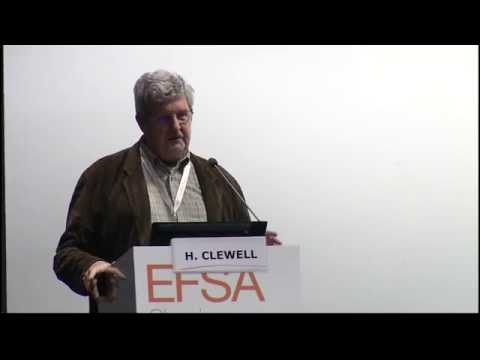
Scientific evidence changes with scientific advances
Over the last 40 years, the revolution in molecular biology has made possible the study of toxicityThe potential of a substance to cause harm to a living organism at the cellular and molecular level to predict possible toxic effects of chemicals in complex organisms. Harvey Clewell of the Center for Human Health Assessment at the Hamner Institutes for Health Sciences in the U.S.A., explored how mode of actionA sequence of events, identified by research, which explains an observed effect analysis is already complementing and in some cases replacing empirical testing in animals, the mainstay of chemical risk assessment for the past century. Presentation
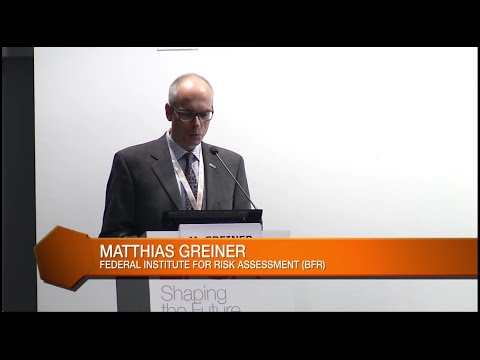
Evidence and uncertaintyScientific concept used in risk assessment to describe all types of limitations in available knowledge at the time an assessment is conducted, with the agreed resources, that affect the probability of possible outcomes to the assessment in microbiological risk assessment
Matthias Greiner of the Federal Institute for Risk Assessment (BfR) in Germany and University of Veterinary Medicine Hannover, revealed that in microbiological risk assessment current thinking, terminology and practice on evidence integration and uncertainty assessment differ from chemical risk assessment. He argues convincingly that there is room to make these approaches more systematic to support decision-making on increasingly complex problems. Presentation
Evidence and uncertainty in environmental risk assessmentThe process of assessing potential harm to the environment caused by a substance, activity or natural occurrence. This may include the introduction of GM plants, the use of pesticides, or the spread of plant pests
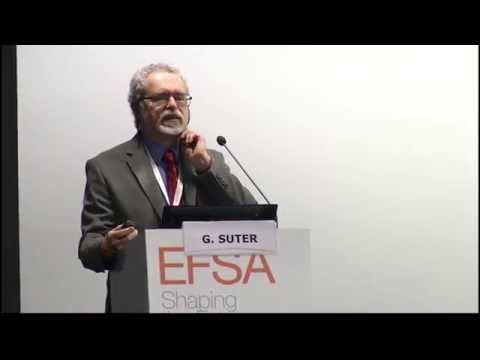
Ecologists have developed many of the key concepts currently used in human risk assessment, stated Glenn Suter of the U.S. Environmental Protection Agency’s National Center for Environmental Assessment. He presents the preliminary results for future EPA guidance for ecological risk assessment dealing with a structured weight of evidenceA process in which all of the evidence relating to a decision is evaluated based on its strength and quality approach that aims to balance quantitative and qualitative evidence with confidence in the results. Presentation
Predictive toxicology – new methods create new uncertainties
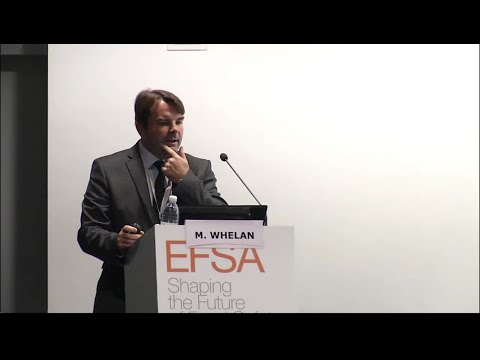
More complex assessments and demands to reduce animal testing are driving alternative methods for predictive toxicology. Maurice Whelan’s work as head of both the EU Reference Laboratory for Alternatives to Animal Testing (EURL ECVAM) and the Systems Toxicology Unit of the Institute for Health and Consumer Protection (IHCP), of the European Commission's Joint Research Centre (JRC), are at the heart of these developments in Europe. These new developments employing alternatives to traditional toxicological testing methods have major advantages including reducing animal testing and test modes of action to a great extent but bring new types of emerging uncertainties that should be considered in assessments. Presentation
Using uncertainty to strengthen scientific assessments
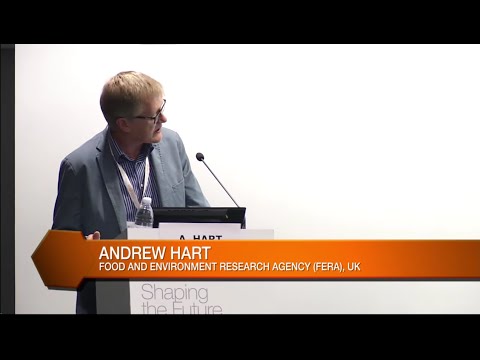
Andrew Hart of the UK Food and Environment Research Agency (FERA) wrapped up the session with an engaging overview of the EFSA Scientific Committee’s draft guidance on uncertainty. The toolbox of methods it proposes is intended to ensure a flexible and consistent approach to uncertainty analysisA method of identifying the sources of uncertainty in a risk assessment calculation and estimating their size and direction so that errors can be taken into account in all EFSA assessments, including options to include a quantitative assessment of the overall uncertainty. Presentation
Moderated Panel Discussion

Kuidas meiega ühendust võtta
EFSA Media Relations Office
Tel. +39 0521 036 149
E-mail: press [at] efsa.europa.eu (Press[at]efsa[dot]europa[dot]eu)
(Ainult siis, kui olete ajakirjanik)
Ask a Question teenus
Teil on küsimus EFSA töö kohta? Võtke ühendust meie küsimuste esitamise teenusega!