



Plant passports
A plant passport is a document that contains vital information required for the trade of seeds, cuttings, plants, and trees between businesses in the EU.
Plant passports are mandatory to identify the origins of plants and plant products, ensuring traceability and compliance with plant health regulations.
Who issues plant passports?
Plant passports can only be issued by National Plant Protection Organization (NPPO) or businesses that are officially registered and authorised by it. To register, businesses must meet plant health, hygiene, and record-keeping standards. Once approved, they receive a phytosanitary registration number and can start issuing plant passports for eligible plants and products.
Which plants and products require a plant passport?
The following should be accompanied by a plant passport.
- Propagating materials: Any materials used for plant propagation, such as seeds, cuttings, bulbs, and rootstocks.
- Potted plants, bedding plants, or tub plants sold for ornamental purposes or consumption, such as flowers and decorative plants.
- An exhaustive list can be found here.
What information does the plant passport contain?
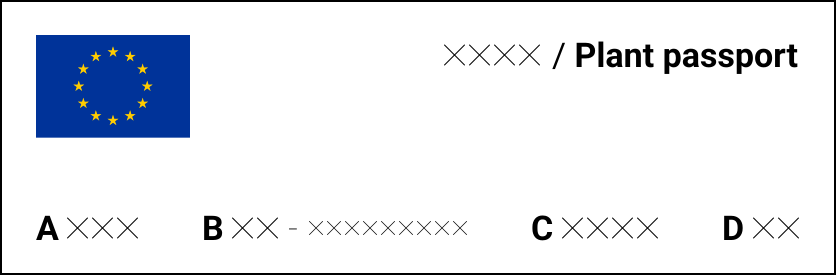
A plant passport is issued in a square or rectangular form and consists of several fixed elements:
- In the top left-hand corner is the flag of the European Union, in colour or black and white.
- In the top right-hand corner are the words ‘plant passport’.
- The letter ‘A’ followed by the botanical name of the plant species in question.
- The letter ‘B’ followed by the ISO code of the Member State of the producer, followed by a hyphen and the phytosanitary registration number of the professional operator; you can find more information here.
- The letter ‘C’ followed by the plant’s traceability code. This may be supplemented with a QR code, hologram, chip or other data carrier belonging to the traceability code.
- The letter ‘D’ followed by the ISO code of the country of origin or production.
Why should we buy plants with a passport?
A plant passport can only be issued for plants that meet all the requirements. While customers do not use plant passports themselves, they benefit from the guarantees they provide.
Use of the passport by businesses guarantees that the plants you buy have been professionally assessed, are traceable, and are free from pests and diseases.
Can plants travel with their plant passport?
Yes, plants can travel within the EU with their plant passport. The plant passport accompanies the plants, seeds, or plant materials during their trade between business operators.
It provides key information that ensures the product meets plant health regulations, allowing for smoother, safer trade across the EU.
While the plant passport doesn’t allow users to trace every detail of the plant's journey, it serves as proof that the plant has met necessary phytosanitary standards. By using plant passports, authorities and traders can monitor the movement of plants, helping to prevent the spread of harmful organisms and bringing customers peace of mind.