

Episode 30 - Food supplements: to add or not to add?
What are food supplements and do we need them? From sprays and soluble vitamins to fortified foods, we explore different ways to supplement our diets and the importance of sticking to recommended doses.
Tune in to find out what supplements can and cannot do, and how their safety is assessed to help you make informed choices.
Listen on:


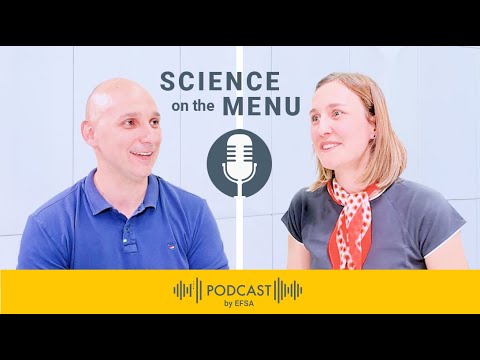
Mariya (00:00)
Can I show you the first one that I take regularly, which is the spray. So this is an iron spray.
Leonard (00:08)
I really wonder, what is the taste of this iron spray. I guess it can be a convenient form of food supplement for some consumers.
Intro (00:24)
Science on the menu. A podcast by the European Food Safety Authority.
Mariya (00:24)
Hello, and welcome back to Science on the menu. Today we're going to be talking food supplements. What exactly are food supplements? Do we actually need them and can they be harmful? To answer these questions, I'm joined today by Leonard Matijević, one of EFSA scientist. Welcome, Leonard to the studio.
Leonard (00:42)
Thanks for inviting me, Mariya. I was considering this would be a hot chair, but I think now the air conditioner in the studio kicked in, finally. So, so far, so good. It's good to be here.
Mariya (00:53)
Good. So you're feeling relaxed and you're feeling comfortable? That's great. So last night, when I was preparing for our chat, I was trying to reflect a bit on my own routine at home and trying to see what kind of supplements I have or what I think are the kind of supplements that I take on a daily basis.
I just wanted to bring them here, show you, a few of them. And I was actually, just give me a second, I'll show you the first one that I take regularly, which is this spray. So, this is an iron spray.
Leonard (1:22)
And I really wonder what is the taste of this iron spray. I guess it can be a convenient form of food supplement for some consumers.
Mariya (01:28)
This is, this is one that I'm recommended to take by a medical professional.
Leonard (1:33)
Also speaking about food supplements in the form of sprays. They can be sometimes trickier to know exactly the dose we are taking with this spray. This really depends. It needs to work properly, because obviously, when comparing them with a pill or a tablet with a very, very precise dose, this can be a little less precise, but for sure very convenient for some consumers.
As long as they deliver efficiently the nutrient, and they are consumed and recommended, they are perfectly fine and legit form of supplements.
Mariya (2:05)
I think the recommended was four pumps, but I know what you mean. It's not always easy to know the correct doses.
Another thing that I have with me is this, soluble vitamins, which I think that, if I infer from what you're telling me, the dosage there is a bit more straightforward. So basicallyyou just put them in a bit of water.
Leonard (2:32)
Well, indeed. I mean, food supplements can come in many different forms.
First association, I guess, of many people when thinking about food supplements would be tablets, pill, , capsules, sachets, powders, maybe also liquid form, spray form as you saw. It's really about food business operators and how they want to market them, how they want to present them to the consumer. And considering several different factors like, palatability, bioavailability, how good they are, ready for our body. Whether there is a prolonged release throughout the day. Also, convenience for example, now, looking at this, form, is it really convenient? I don't know, maybe it's it would be much better if you just in a few seconds, you take the tablet, you take it with the water. Here, for example, you need to wait. Maybe even a couple of minutes. Then maybe you are also not very thirsty. But you need to drink the whole, glass of water. And then also, you may lose some of the ingredients in the glass.
Mariya (3:38)
Indeed. So why do they come in these different shapes and forms? So, yes, you mentioned one is convenience.
Leonard (3:50)
It's mainly convenience.
Mariya (3:50)
The effectiveness of the ingredient, does it also determine what shape exactly they come into?
Leonard (3:52)
Obviously this one is dissolved in water.,it is containing vitamins, I presume, which are water soluble, for sure. The food matrix, if this is the proposed condition of use of them plays a role, especially in regards to bioavailability of nutrients theindustry wants to deliver that to our bodies.
Mariya (4:15)
You mentioned the word bioavailability. Can you remind us or tell us what exactly that means? In simple terms.
Leonard (4:22)
It's a very simple term. Also, I think there is a legal definition, which says that it needs to be available to our body. So,if we take something not bioavailable, it will simply pass to our body, will be excreted, and there will be no particular use of taking something like that.
Mariya (4:40)
Basically, our bodies need to be able to absorb that.
Leonard (4:42)
Absolutely.
Mariya (4:43)
I have one last thing for you that I kept for last, just because I wanted to show you, something that I take almost every morning to supplement my diet. And these are my favourite cornflakes here. And I know they're rich of fiber, but I think additionally, they have some, vitamin B12, B13, and I think I also get some extra iron on them if I believe the label. Is this also a food supplement that I'm taking?
Leonard (5:14)
if the label of the product, it is mentioned that they contain vitamins and minerals, then here we are talking about fortified foodfortified food and you also, correctly pointed out you are supplementing your diet. In both cases, in case of food supplement and fortifiedfortified food foods, their purpose is to supplement your diet. The difference would be the different form in the in which the supplement is delivered., When you eat breakfast cereals, you eat them as part of your regular meal while, food supplements you will take in a dose form in a tablet or a pill or what I also previously mentioned.
This would be more or less exact those you will take also here. The difference would be that, I guess very few of us would actually, rate the amount of cereals. The dose we take of those added the nutrients is, quite variable and not very precise as we would get from food supplements.
Mariya (6:17)
So it's a completely different, let's say it's a different story.
Leonard (6:18)
It is. Also, fortified foods played a very important role, in some populations, we know that food can be fortified on a voluntary basis. Again, this is, just up to the food business operator. Maybe they want to just replenish, some nutrients, which were potentially lost during the production process. We know that a lot of nutrients are not actually very stable or they just want to add some benefit to consumer. On the other hand, we also have, instances when the member states require, they mandate some food, or some nutrients to be added into certain foodstuff.
We have, for example, very famous, addition of, iodine in table salt or maybe example of vitamin D, which is also added to certain foodstuff, mainly in Nordic countries, so where people are really lacking sunny days. This is part of nutritional policies of each member state, when they pick up or identify that there is a widespread, nutrient deficiency of a particular nutrient in the general population.
Mariya (7:38)
That I didn'tknow. That's great. Okay, so now we know what is fortified food. But just coming back to the topic of our podcast, the food supplements. How do we define food supplements?
Leonard (7:53)
Maybe to start with a definition, actually we have a legal definition. And in my mind, when reading the definition, I think, there are five key elements or characteristics which each, food supplement needs to have.
I hope now I will remember all five elements. First one would be that they are, defined as a foodstuff. That means they also belong to the general food law. Therefore, they need to be safe for human consumption. They need to supplement your normal diet. Therefore, they need to come in are concentrated sources of nutrients and other substances with a physiological and nutritive, effect on your body.
They also need to come in a dose form. This recommended daily dose needs to be clearly defined. They are designed to come in, measured small unit quantities, which usually means, micrograms or milligrams daily.
Mariya (8:54)
So, for example, one tablet. This would be an example of a dose form.
Leonard (8:56)
This is a perfect example of food supplement, fitting all those five key elements.
Mariya (9:05)
There is a lot of choice available. And as you mentioned, different dosage, liquid,sprays. But do we actually need food supplements?
Leonard (9:13)
Well, that is a million question. Complicated question, also complicated answer. I will try to explain. I would guess or assume that the majority of healthcare professionals and nutritionists would really tell you that you first need to focus on a balanced diet.
You really need to try to get all of yournutrients fromregular diet. Then, of course, this is when things get much more complicated. And, depending on the different situation that you have, individual cases like age groups, different lifestyles, different conditions, there is a place in our diet for food supplements as well. For example, there is known requirement also in some population groups, they in certain stages need more nutrients. We know for pregnant women or those who would like to become pregnant, they require more of folic acid, or vitamin B9 in order to prevent, neural tube defects of fetuses. Also iron. Then, as I previously mentioned, people, for example, who are not exposed to much sunlight, they would require more vitamin D. We also know that the elderly, their diet is typically not sufficient to meet their required amounts for calcium. So, these would be some examples,. I would say, in general, in the EU, luckily we do not have so many examples of widespread nutrient deficiencies.
I would say for the majority of population, healthy population, food supplements are not needed. And you really need to try to get all of your nutrients, first of all, from the balanced and varied diet. Then, maybe also I would like to distinguish here, and this is also sometimes maybe confusing for people, when you have some medical conditions, which is diagnosed by your healthcare professional and your doctor. Then, he or she can recommend you or prescribe you even some nutrients. For example, in the case of iron deficiency anaemia, you can get prescription of iron. In this case, this would be a medicinal product or a drug, because this is also very important to emphasise that, food supplements as any other food are not meant to prevent, treat or cure disease.
For prevention., we may have some philosophical discussion. Maybe some people will not completely agree. But this is also a legal definition. So, such and such properties of food should not exist. This is really focused and specialised for medicinal products and drugs. In that case, you will most likely get those nutrients in therapeutic doses, which usually are higher than what you would get from food supplements.
Mariya (12:38)
I was also wondering if food supplements it's kind of the case of too much of a good thing it’s not good. You mentioned already a bit the dosage but can in certain cases the intake of supplements also be harmful?
Leonard (12:56)
Unfortunately, yes. And this is also a common misconception when, people think that something is good and the more is even better. And especially when we are talking about, vitamins and minerals. And unfortunately, this is not the case.
And here is also where EFSA plays a big role throughout the years we have been constantly working on, establishing something called dietary reference values or DVS. One of them focuses on excess intake. So, the risk, caused by the excess intake of a particular nutrientOf course, here we are not talking only about food supplies, but nutrients in general.
But of course, the disease can be related to food supplements. And, here in this area, we established something called upper level, which is basically, level of intake of a particular nutrient which can be chronically used, without risk for human health. But after this level, we can expect the risk to start to increase.
And this is for sure the case for the majority of nutrients, vitamins and minerals. I can mention that I was personally working on the upper-level opinion on manganese, which is essential mineral. But on the other hand, if taken in excess amounts throughout a prolonged period of time, it can be neurotoxic.
Then for example, we have vitamin D, which can alter bioavailability of calcium and even cause hypercalcemia. We also have, issue withexcess intake. Again, I am repeating during prolonged, intake time of folic acid or vitamin B9, which can mimic deficiency of vitamin B12. People really suffering from this deficiency can be even at an even higher risk.
Mariya (14:50)
I was also preparing a bit for our conversation, reading the labels of the supplements that I have at home. For example, the effervescent tablets, they support your immune system and physical well-being. This is something that I think we at EFSA consider as a health claim. And we are also, responsible in a way for assessing it, am I correct?
Leonard (15:12)
Yes. What I was mentioning and focusing on was the safety assessment or risk assessment EFSA is conducting either due to deficiency of a particular nutrient or due to excess intake. But indeed, health claims are the area where EFSA is also assessing benefit. And what does it mean?
It means that, it needs to be scientifically proven, that there is a causal relationship between an intake of particular food or food ingredient,r we are not only talking about food supplements, but of course, health claims can also be related to them and the claimed effect on our health. Relationship needs to be established in order that later on, risk managers, the European Commission, Member States can approve such a health claim, and then a food business operator can put such a claim on the labelling of their product.
Here again, I would like to emphasise what I mentioned before thatthe function of a food is not to treat, cure or prevent disease. They cannot contain such claims, but they can and they usually contain wording such as that they support, help normal functioning of different systems within our body, like nervous system, muscles, bones, constraints and so on.In the area of food in general, but also when we are talking about food supplements, first, and most importantly, food and food supplements need to be safe for human consumption. Then we can speak about potential benefit, but again, in another framework under health claims.
Mariya (17:02)
Leonard, you mentioned a lot of very useful bits and pieces throughout our conversation.
What would be the leaving message for the people listening and watching us?
Leonard (17:14)
Consult, inform yourself. And in this way, you will play an active role in making food supplements safe.
Mariya (17:25)
Perfect. I have nothing to add. Thank you very much for your time and expertise.
Leonard (17:31)
Again, thanks for having me. It was a pleasure.
Mariya (17:33)
To our listeners and viewers, thank you very much for joining another episode of Science on the menu. Remember, you can catch all episodes on wherever you get your podcast. For more science content, make sure you visit ESA's website and follow us on social media. That's all for now. Thank you again very much, and I look forward to seeing you next time on Science on the menu.
Podcast details
Host:
Mariya Dokova, Communication Assistant in the Communication Unit at EFSA
Guest:
Leonard Matijevic, Scientific Officer in the Nutrition and Food Innovation Unit at EFSA
Disclaimer: Views expressed by interviewees do not necessarily represent the official position of the European Food Safety Authority. All content is up to date at the time of publication.